Bivouac on the Tour du Mont-Blanc: should you still dream of it?

You know the photo: the one that makes you want to hike the Tour du Mont-Blanc as a bivouac. A lone tent pitched on a high pasture, the Mont-Blanc or its neighbouring peaks turning pink at sunset, not a soul around. And once you cop on to how hard the TMB huts are to book, the idea of getting the tent out soon starts to look pretty good.
Yet on a trail that sees more than 50,000 walkers every summer and crosses three countries with ever-tighter rules, that image rarely matches the reality of high season. Most of these photos were taken in early June or late September, in spots and at hours you’ll struggle to find in July and August.
The genuinely permitted spots are few, and the most photogenic stretches are often closed to wild camping. As for the solitude on offer, it’s thin on the ground at the peak of summer.
Worth saying upfront, too: from Australia this is a serious trip. You’re looking at 20-plus hours in the air and a solid dose of jet lag before you even reach the trailhead, and the TMB season runs over the northern-hemisphere summer (June to September), which is bang in the middle of our winter back home. So here’s what the law actually says, country by country, where you can (or can’t) pitch a tent stage by stage, the gear to bring, and our honest take from the ground.
At Altimood, we run spring bivouac courses in the Écrins or Vercors and snow bivouac courses in winter. Bivouacking? We’re hooked ourselves. Even so, in high season we tend to offer hut-to-hotel treks like the TMB in 7 days. Around the Mont-Blanc, in peak season, the bivouac loses a fair bit of what makes it special.
(A quick note on the figures below: prices are in euros, so factor in the conversion from Aussie dollars when you’re budgeting.)
- Bivouac, tent, wild camping: what are we actually on about?
- Can you really wild camp on the Tour du Mont-Blanc?
- TMB bivouac rules, country by country
- Where to pitch your tent, stage by stage
- Gear for a TMB with a tent
- How much does it cost?
- Our take: the TMB bivouac hasn’t the glamour you imagine
- Frequently asked questions about wild camping and the TMB
- Official sources
Bivouac, tent, wild camping: what are we actually on about?
The three terms get thrown around as if they’re the same thing, but the law draws a line between them, and that line is what decides your night.
A bivouac is a single-night halt, tent or tarp pitched at dusk and packed away at dawn. On the TMB, it’s the only practice that’s tolerated, within a strict framework. Wild camping, by contrast, means settling in for several nights in the same spot and spreading out your camp: it’s banned on very nearly the whole route. As for the tent, it’s only a shelter; pitching one doesn’t put you on the wrong side of the law by itself. It’s the duration, the hour and the place that make the difference. If the bigger question of how comfortable your night will be is on your mind, we covered it separately in bivouac, camping or cabin?
Hang on to the rule that crops up everywhere: pitch late, leave early, stay one night only, and leave no trace.
Can you really wild camp on the Tour du Mont-Blanc?
You can, but far less freely than the popular picture would have you believe.
Three things chip away at the dream. First, the crowds: between Les Contamines and the Col du Bonhomme, or from Champex to Trient, you’re never on your own, and a quiet evening spot is soon shared with other tents. Second, the regulatory geography: the TMB threads together France, Italy and Switzerland, and each country has tightened its rules in recent years, going as far as closing whole areas to bivouacking. Third, the reality on the ground: the best images are often shots from the start or end of the season, when the pastures are deserted and still patched with snow, at a time when few people are walking and the rangers ease off.


This isn’t a spray against bivouacking, just what the ground looks like now. The Tour du Mont-Blanc is still a cracking playground, but it isn’t where you’ll find the solitude of a fully self-sufficient trek, well off the beaten track. That solitude still exists, elsewhere, in less-frequented ranges. On the TMB, the bivouac is earned through bookings, timings and permitted zones. Let’s see which ones.
TMB bivouac rules, country by country
The TMB crosses three countries, and each has its own rules. Here’s the summary before the section-by-section detail.
| Country (TMB section) | Bivouac in brief | Where to sleep within the rules |
|---|---|---|
| France (Les Houches, Contamines, Aiguilles Rouges) | Tolerated for one night, evening to morning, under local orders; restricted in the two reserves | Outside reserves, away from roads; in reserves, only in permitted areas |
| Italy (Val Veny, Courmayeur, Val Ferret) | Banned below 2,500 m, which is almost the whole route | Campsites in the Val Veny and Val Ferret |
| Switzerland (La Fouly, Champex, Trient) | Generally banned, very narrow tolerance | Campsites at La Fouly and Champex-Lac |
In France
In France, bivouacking has no legal status of its own: pitching a tent counts in law as camping, governed by local council and prefectural orders. On the ground, the managers of natural areas often tolerate the same practice: one night, from sunset to sunrise, away from roads and villages, and you leave without a trace. This informal framework is what applies on the French portions outside reserves (Les Houches, Saint-Gervais, the Chamonix valley, Vallorcine above 1,700 m).
The crux plays out in the Contamines-Montjoie nature reserve, which the TMB crosses on the second stage. Bivouacking there is banned from 15 June to 15 September, except on dedicated pitches and by compulsory booking via reserve-bivouac74.fr: the Pont de la Rollaz, La Balme, and a managed area at the Pontet leisure park. Outside that window, it stays tolerated from 7 p.m. to 9 a.m., as long as you keep clear of the red zones, including the very popular lacs Jovet and Plan Jovet sector above Les Contamines.
Farther on, the Vallée des Glaciers (between Les Chapieux and the Col de la Seigne) bans bivouacking on its pastures: only the council-run area at Les Chapieux is set up for an overnight stay. And on the way back, the Aiguilles Rouges reserve (with Carlaveyron and the Vallon de Bérard) works differently: no booking area here, but a bivouac tolerated from 7 p.m. to 9 a.m., banned year-round in the busiest red zones (Lac Blanc, Lacs des Chéserys, Col des Posettes), where swimming in the lakes is also off-limits.
In Italy (Vallée d’Aoste)
This is the most restrictive portion, and the least known. In the Vallée d’Aoste, camping below 2,500 m is banned, and the fine runs into the hundreds of euros, topping a thousand if there’s a fire or abandoned rubbish. Bivouacking is tolerated only above that altitude, for one night, tent packed down by morning.
The catch is that the Italian route only crosses 2,500 m at the two passes that bookend it: the Col de la Seigne (2,516 m) at the entrance, the Grand Col Ferret (2,537 m) at the exit. Between the two, the Val Veny, the descent to Courmayeur and the Val Ferret all sit below the legal threshold. Pitching your tent within the rules on this stretch is a big ask. The lawful option runs through the campsites of the Val Veny (Aiguille Noire, La Sorgente) and the Italian Val Ferret, which has little left in common with wild bivouacking.
In Switzerland (Valais)
The Swiss rule is simple: bivouacking is generally banned on the route. Tolerances exist, but they’re narrow: a single night, above the tree line, outside nature reserves, and never in a group. The local councils you cross (Orsières, Trient, Bovernier) enforce strict orders against wild camping.
In practice, the Swiss nights of the TMB are spent on a campsite: Camping des Glaciers at La Fouly, the Rocailles and Val d’Arpette campsites at Champex-Lac. Reckon on around 20 to 35 euros a night depending on the number of people.


Where to pitch your tent, stage by stage
The classic TMB runs 170 km, 10,302 m of climbing and 11 stages, anticlockwise from Les Houches. Cross-referencing the three sets of rules, here’s what a legal night looks like, section by section.
Les Houches to Les Contamines (stage 1). Outside the reserve, bivouac tolerated come evening, away from roads. As soon as you enter the Contamines reserve, switch to the booking areas.
Les Contamines to Les Chapieux (stage 2). Most of the stage is in the reserve: from 15 June to 15 September, only on the booking areas of the Pont de la Rollaz and La Balme. At the finish, the council-run area at Les Chapieux settles the matter.
Col de la Seigne and the Italian side (stages 3 and 4). On the French side, the Vallée des Glaciers is closed. On the Italian side, everything sits below 2,500 m: in practice, you sleep at a hut or a campsite (Val Veny). A lawful bivouac there is next to impossible.


Italian Val Ferret to La Fouly (stages 5 and 6). Once over the Grand Col Ferret, you cross into Switzerland: head for the Camping des Glaciers at La Fouly.
Champex, Trient and the Fenêtre d’Arpette (stages 7, 8 and 9). Campsites at Champex, rest areas around Trient. The top of the Fenêtre d’Arpette, above the forest, can suit a night, but the ground is rocky and exposed.
Back into France, Aiguilles Rouges (stages 10 and 11). Reserve rules apply: bivouac tolerated from 7 p.m. to 9 a.m. but banned year-round in the red zones (Col des Posettes, Lac Blanc, Lacs des Chéserys), and water points are scarce. This is the sector where you see the most tents pitched illegally, and the most heavily patrolled.
The lesson from this list: on a TMB with a tent, your nights alternate between booking areas, compulsory campsites and a few rare windows of true high-altitude bivouac. A long way from the freedom we attach to the word.
Gear for a TMB with a tent
If you’re set on heading out with your roof on your back, you may as well carry it light. On that score, our bivouac gear list sets out the essentials. Here’s what to adapt for the Mont-Blanc.
- Lightweight tent or tarp: aim for 1 to 2 kg. A double-skin tent is reassuring when the storm builds in late afternoon, common in summer on the massif.
- Warm sleeping bag: even in July, a night at 2,300 m drops close to 0°C. Early or late season, plan for warmer still.
- Insulating mat: pasture ground stays cold, the R-value matters as much as the comfort.
- Gas stove: canisters are easy to find at Les Houches, Courmayeur or Champex. Fires are banned everywhere.
- Water filter or treatment: essential. We compared the options in drinking safe water on the trail.
On the resupply and water front, the fountains in the villages and at the huts dot the route, but the Aiguilles Rouges reserve has none. Real shop stops are rare: Les Contamines, Courmayeur (the last big supermarket, ideal for a full resupply) and Champex-Lac, more modest. For trek food, our tips on trail nutrition will save you carrying three kilos too many.
That leaves the golden rule, non-negotiable in busy mountains: you pack up at first light and leave without the slightest trace, all rubbish carried out to the last scrap and toilet stops taken care of well away from water points. A trampled, fouled pasture means one more ban the following year.
How much does it cost?
The budget argument partly holds. A night on a pitch or campsite costs 25 to 35 euros, against 55 to 95 euros for half-board in a hut. Over seven stages, the gap is real.
But don’t expect the bivouac to come free: between the compulsory campsites in Switzerland, the bookable areas in France and the impossibility of pitching freely in Italy, a fair share of your nights stays chargeable. You mainly save on hut dinners and breakfasts, at the cost of 3 to 4 extra kilos on your back (tent, mat, sleeping bag, stove) and tighter logistics.
Our take: the TMB bivouac hasn’t the glamour you imagine
The romance doesn’t hold up for long. Between the crowds, the bookings, the closed zones and the compulsory campsites, bivouacking on the Tour du Mont-Blanc is more an administrative obstacle course than an adventure. You can do it, hundreds of walkers do it every summer and come away with great memories. But the image that made you click, the lone tent facing the massif in silence, mostly belongs to the margins of the season and a handful of increasingly watched pitches.


Two conclusions, depending on what you’re really after.
If it’s the Tour du Mont-Blanc that you dream of, take it for what it is: a great hut-to-hut route, with the convivial evenings and the terraces facing the glaciers. That’s the spirit of our comfort-version TMB in 7 days, well worth the long flight from Australia. To pin down your dates, when to do the TMB answers the season question.
If it’s the bivouac that’s an end in itself, the urge to walk for several self-sufficient days and fall asleep far from anything, then the Mont-Blanc isn’t the right range. The Southern Alps offer that freedom with a good deal more room, and that’s precisely where we take our groups under canvas.
Frequently asked questions about wild camping and the TMB
Is wild camping allowed everywhere on the Tour du Mont-Blanc?
No. It’s regulated in France (hours, one night, booking areas in the Contamines reserve), very limited in Italy (banned below 2,500 m, which is almost the whole side) and generally banned in Switzerland, where you sleep on a campsite.
What fine do you risk for an illegal bivouac?
In the Vallée d’Aoste, camping below 2,500 m exposes you to a fine of several hundred euros, which can top a thousand if there’s a fire or abandoned rubbish. On the French and Swiss sides, enforcement happens mainly in the nature reserves (Contamines, Aiguilles Rouges), with fines possible.
Can you do the whole TMB with a tent?
In practice, not without compromise. You’ll alternate high-altitude bivouac where it’s permitted, booking areas and compulsory campsites. The Italian side, almost entirely below 2,500 m, will force you through a hut or a campsite.
Where do you find water when bivouacking on the TMB?
At the fountains in villages and huts. Mind the Aiguilles Rouges reserve, which has no water point: head up with your reserves and a means of filtration.
Can you pitch your tent near the Italian huts (Elisabetta, Bonatti)?
Better to give it a miss. The pastures around the Val Veny and Val Ferret huts are private and below 2,500 m, where camping is banned in the Vallée d’Aoste. Some wardens tolerate a tent for guests who dine at the hut, but that’s a favour left to their discretion, not a right.
Official sources
The rules change every season and can be tightened by local orders. Before you set off, always check the texts in force with the relevant authorities.
- France (Haute-Savoie): bivouac rules in the nature reserves, prefecture of Haute-Savoie, and pitch bookings at reserve-bivouac74.fr.
- Italy (Vallée d’Aoste): advice for walkers, official site of the Autonomous Region of Vallée d’Aoste (tent banned below 2,500 m, penalties set by regional law 8/2002).
- Switzerland: camping and bivouacking, Swiss Alpine Club, and the federal geoportal map.geo.admin.ch to view protected areas.
Fancy a self-sufficient trek?
Far from the crowds and the orders of the Mont-Blanc, we design tent-based trips in ranges where solitude still exists. Multi-day treks, high-altitude lakes, deserted pastures: that’s where the bivouac regains its meaning. And for the more adventurous, winter opens another playground: a night in the snow on a winter bivouac course, or building an igloo to sleep in.
 France | Alpes
Mountain bivouac in the Alps
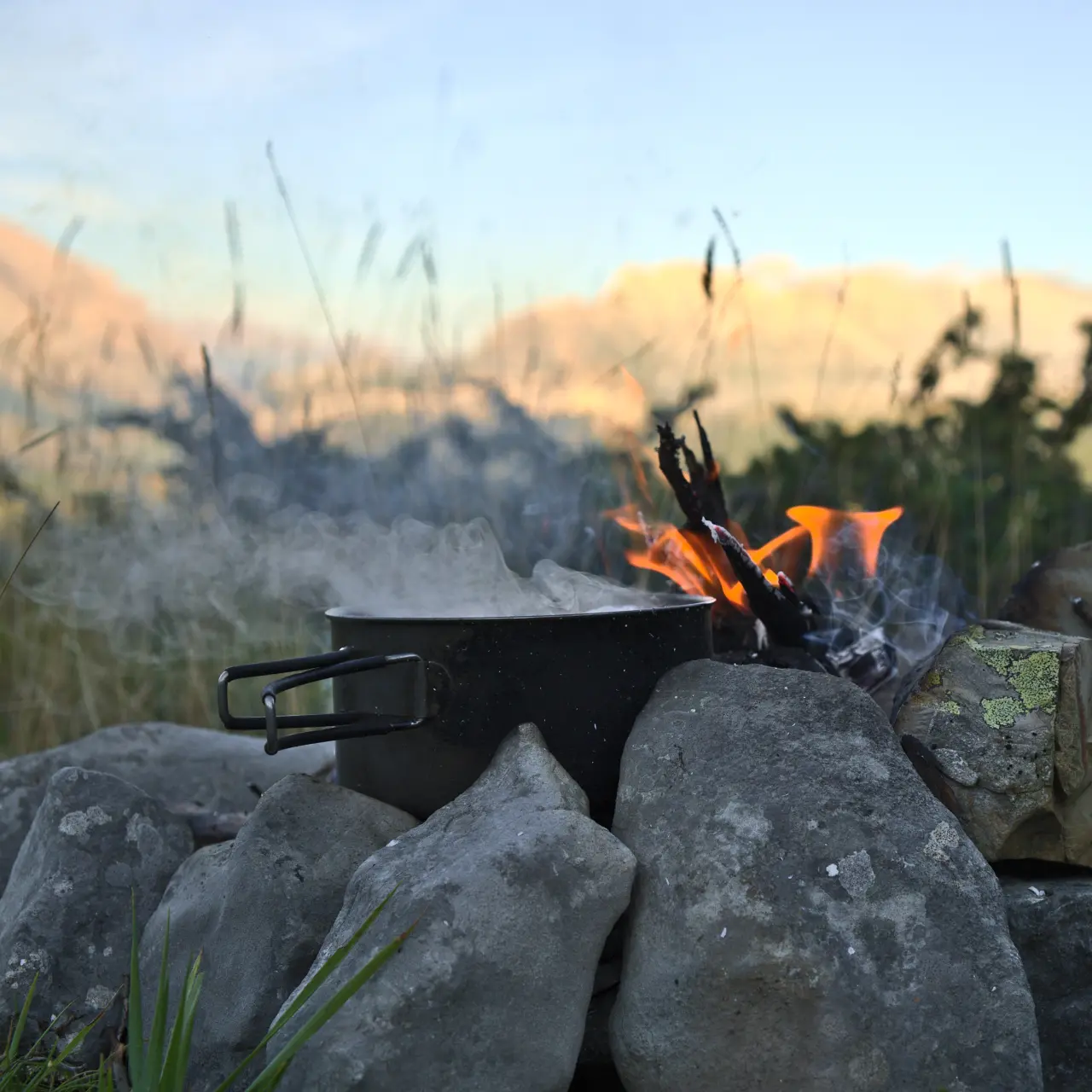
From A$331 – 2 joursGo hiking in the mountains to enjoy the sunset, a shepherd’s meal cooked on the coals and fall asleep under the stars sky. A 2 days hiking trip in the Alps.
Know more →
 France | Alps
Snowshoeing & Winter Bivouac
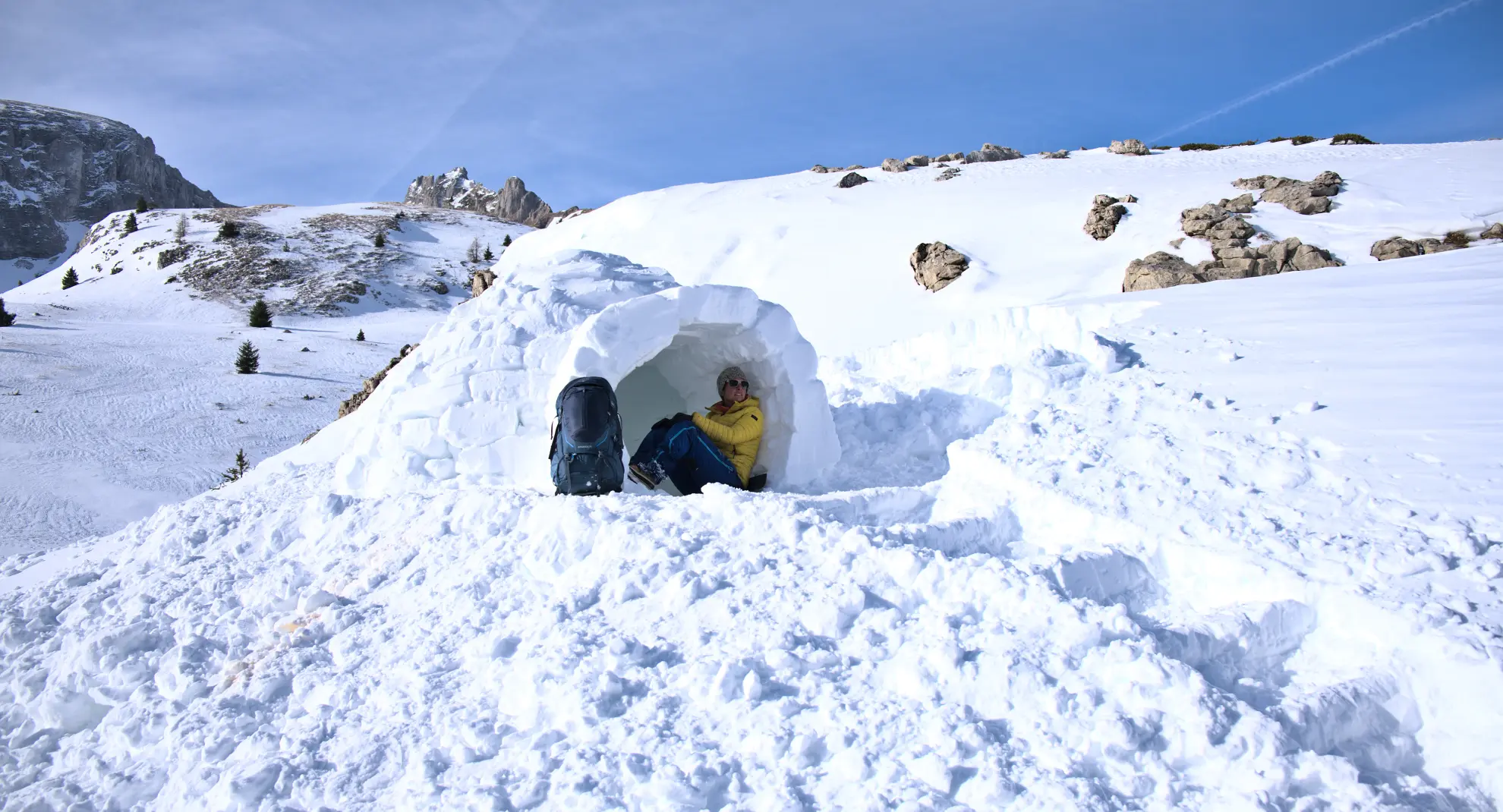
From A$573 – 3 daysConfront the challenges and risks of the cold, learn to progress in safety and sleep one night in the snow… A whole program for this winter adventure.
Know more →
 France | Alps
My first night in an Igloo
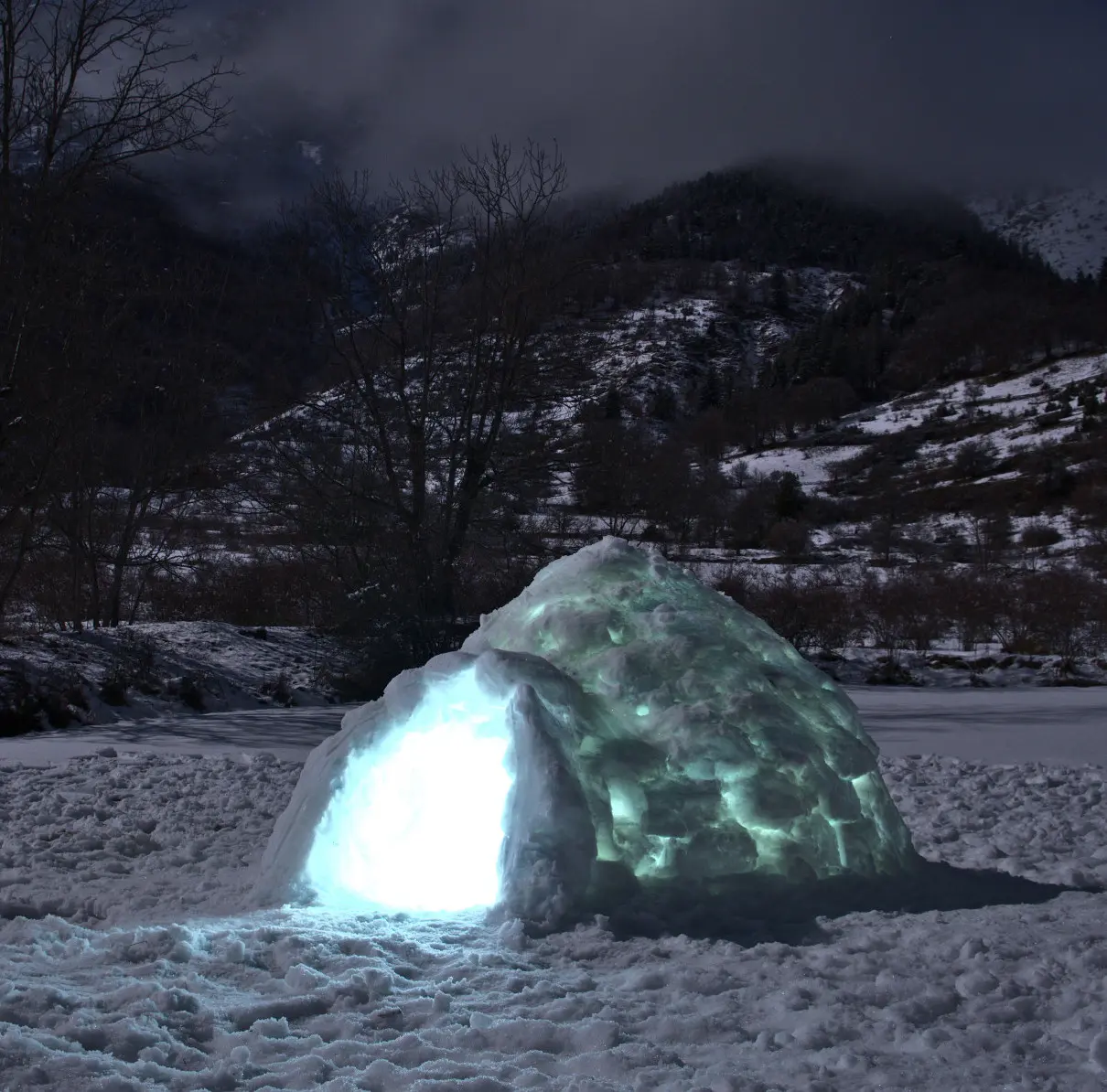
From A$573 – 3 daysReady to build your own igloo in the wilderness and sleep in it warmth. An experience to share with family or friends in the Alps.
Know more →


Continue reading


- Altimood Mountain Guides
- Guided Hikes in the Alps
- Tour du Mont Blanc
- Bivouac on the Tour du Mont-Blanc: should you still dream of it?